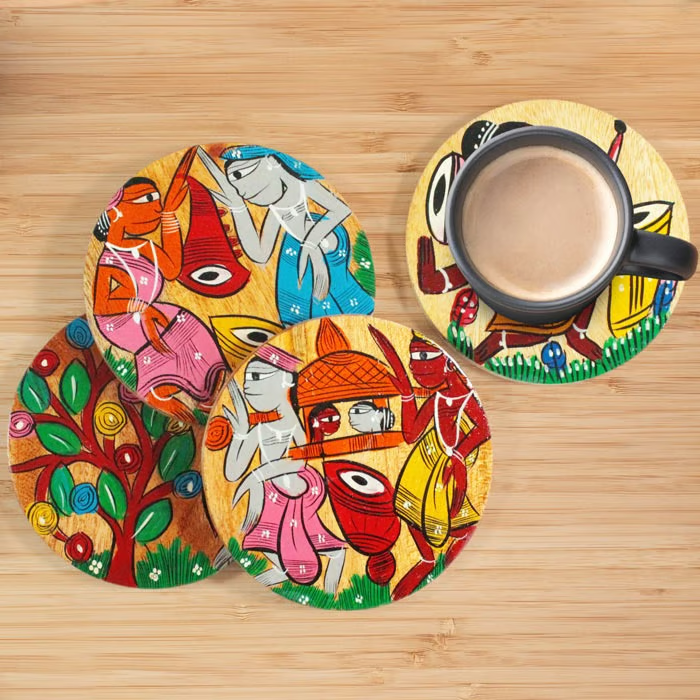
Sourcing handmade products from India sounds complex — different time zones, language barriers, minimum order confusion, and quality inconsistency are fears that hold many buyers back. But done right, sourcing Indian handicrafts is one of the most rewarding business decisions a retailer or designer can make. Here's a practical guide to doing it without the headaches.
Step 1: Know Exactly What You Need
Before reaching out to any supplier, get specific. Define your product category, preferred material (mango wood, sheesham, acacia, bamboo), finish type (matte, polished, natural), approximate size, and intended use (retail, gifting, interior project). The more precise your brief, the faster and more accurately a supplier can respond.
A vague enquiry like "I want wooden products" will get a vague response. A specific enquiry like "I need 200 units of 4x4 inch mango wood coasters with a natural matte finish and export packaging" will get you a clear quote within 24 hours.
Step 2: Request Samples Before Committing
Any reputable Indian handicraft exporter will offer samples before bulk orders. Always request them. Check the finish quality, weight, consistency, and packaging. A sample tells you everything a photograph cannot. At Livora Crafts, we send samples with full specification sheets so buyers can evaluate exactly what they'll receive at scale.
Step 3: Understand MOQ and Pricing
Minimum order quantities (MOQ) vary by product and supplier. For most wooden homeware categories, MOQs typically range from 50 to 500 units per design. Pricing is almost always negotiable at volume — but don't open a negotiation before you've seen samples and confirmed quality. Build the relationship first.
Step 4: Clarify Packaging and Compliance
Export packaging is non-negotiable. Products need to survive international shipping. Always confirm that your supplier uses export-safe packaging — typically double-walled corrugated boxes with internal cushioning. Also clarify any compliance requirements for your market, such as wood treatment certifications for Australian customs or FSC certification for European retailers.
Step 5: Build a Long-Term Relationship
The best sourcing partnerships are ongoing, not transactional. Suppliers who know your taste and requirements will proactively suggest new products, alert you to seasonal availability, and prioritise your orders. Treat your Indian supplier as a creative partner, not just a vendor.
Why Source Through Livora Crafts
- Direct access to artisan clusters across North India
- Flexible MOQ suited for independent retailers and large buyers alike
- Quality verification on every shipment
- Custom finishes, branding, and packaging available
- Worldwide export with reliable logistics partners
Ready to start? Download our catalogue or send us a sourcing enquiry — we'll guide you through every step.